One would eat hot dogs, but only with catsup, while it was mustard or nothing for another. Plain pasta for one, sauced for the other two. One of us liked only the yolks of eggs, another only the whites: buttered corn, plain corn. Until six, I wouldn’t touch cheese: after that, only American cheese, which in our house came to be known as Joni cheese.
Liver was the only constant – all three of us always hated it — but few other foods commanded our unified appreciation or aversion, and my mother was the keeper of all our preferences.
Not only did each of us have different likes and dislikes, but they changed all the time. And it wasn’t simply that each kid added to her list of approved foods; we also stopped liking foods we’d previously liked for no apparent reason. Which made my mother, like mothers everywhere, crazy.
“Aren’t you going to have some?” she asked one night when I hadn’t touched the asparagus.
“No, Mom.”
“But you like asparagus,” she said eagerly.
“No, Mom, I hate it,” I said with an impatience that implied that there was something terribly wrong with her ability to remember the simplest things.
But my mother wasn’t misremembering, I’d just changed my mind about what I liked. Why? I don’t know, lots of unconscious reasons, I suppose, related to asserting independence, peer pressure, and coolness — issues my mother probably understood. She witnessed it all and held the knowledge of everything I liked and didn’t like, all I denied, all I fought, all I saw and didn’t see: all the ways I changed and grew.
And she never stopped being happy to feed me and cook the foods I liked.
My father loved to feed us, too, but it wasn’t second nature to him to inventory our changing tastes the way it was with my mother.
I’ve come to think of the love of feeding others as mother love, because I see its purest form in mothers. Under ideal conditions, life creates life through mothers in love and, as part of the package, nature gives them a love of feeding their children. It’s the biological imperative hard-wired to food. After the birth itself (the coming into form from the formless), it’s love’s first action: Life has to be fed.
Regardless of how mothers deal with their children’s demands or how distorted life may be for some, mothers are genetically disposed to get pleasure from feeding their young.
Which is why my sister’s friend, Sandra, makes two types of fish when she makes fish for dinner, why she serves one daughter white meat boneless chicken, another soy chicken products, and only dark meat on the bone to her son.
“It can be a little annoying, but I’m so happy that everyone’s eating a good meal,” she said.
It’s been a while since my mother has been gone from this place, but I get and give the mother love when I eat with people I love.
Sometimes, when my husband’s eating a dish I made, something happens to me physically. It’s rare and only happens when he’s very hungry and unselfconsciously digging in — often after midnight when he’s just gotten home from a trip or a long work night. As I sit with him, my arms start to really tickle and I become aware of how much I love him.
Don’t ask: I don’t know what this is, but I have to wiggle around and rub my arms briskly to get the tickling to stop. I mean, I guess it’s clear: I’m tickled to see him eat.
My mother never stopped loving to see us eat, either, even as adults. And when we grew up and went away, she and my father continued their mutual love of food and fed each other.
I have a memory of my mother I’ll never forget. It was a simple thing, a small moment.
She was visiting me on the Cape and my father was at home in Connecticut. It was summer, a beautiful, warm evening in Woods Hole, and she was lying on my bed on the phone with my father. At this point in their relationship, things weren’t so good. It was a quiet conversation, a checking in. I was in the kitchen, doing something, when I heard her ask him what he ate. Then, after some quiet, she said:
“Some good haddock from that fish market in Falmouth, baked potatoes, and a salad.”
Then, after some more silence, she spoke again.
“Yup, she ate with me.”
Follow Joan Wilder on Twitter.
]]>
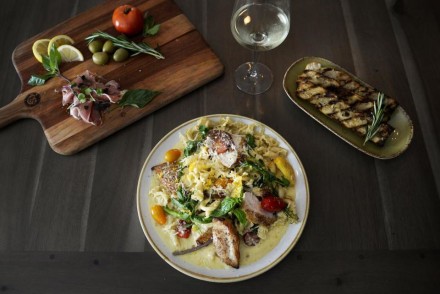
Photo for the Boston Globe by Jamie Cotten
IN THE KITCHEN
It’s nice seeing Blu Mussel chef-owner Anthony Ambrose step into the dining room to visit a table or talk with guests. Ambrose made his name when he opened his first restaurant, Ambrosia on Huntington, in the early ‘90s. Among the many accolades it received, Esquire named it one of the top 25 best new restaurants in the country and Bon Appetit called it one of Boston’s best. Ambrose’s first job in Boston was under chef Jasper White at Jaspers. Among his other big influences, Ambrose credits his time studying with French chef Olivier Roellinger and his work as executive chef at Seasons in The Bostonian Hotel.
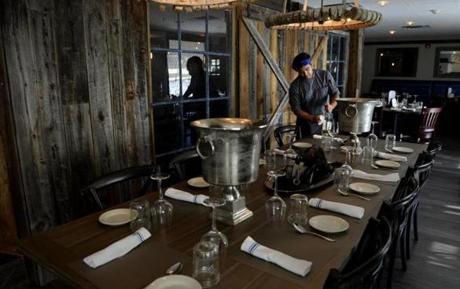
Photo for the Boston Globe by Jamie Cotten
THE LOCALE
Located on Route 3A where the former Great Neck Grille used to be, Blu Mussel has been totally renovated. Tired of formal dining scenes, the chef-restaurateur has fashioned the 100-plus seat space to have a rustic feel. Walls and half-walls define different dining areas, passageways, a bar, and a lounge. There’s a street-side room that has the restaurant’s only windows (oh, if only they could be flung open in summer!), massive hanging barn doors that slide shut for private parties, and a fireplace. The bar takes up one side of the restaurant, and the adjacent lounge area has banquettes and cozy, low coffee tables made of six-inch-thick rounds cut from trees. A central, glass vault shows off wine, and servers cut bread at a butcher-block table in a walkway area. It’s been a tough spot for previous restaurants, but Ambrose has made Blu Mussel a pretty place.
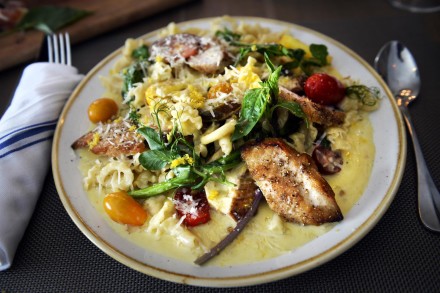
Photo for the Boston Globe by Jamie Cotten
ON THE MENU
First of all, the green curry and coconut blu mussel appetizer ($14) deserves to have a restaurant named after it. Served in a big, pleasing asymmetrical bowl, the lemony, coconut broth is as heavenly as the little mussels. I sipped a cup of it by the spoonful.
On each of three visits, the menu was a bit different. Ambrose says that 80 percent of the dishes will be constants, and that he’ll swap out a few others here and there.
I can tell you that the meaty Bolognese ($22) with the house-made, al dente fettuccini isn’t going anywhere soon. We enjoyed the chicken and fresh lemon pasta ($19), too, and were charmed by its frilly ballerine pasta. If I were choosing among meaty pastas, I’d take the Bolognese over the spaghetti and meatballs ($19), although the fresh spaghetti in it is great. Pasta plates are big (Ambrose doesn’t want anybody to leave hungry), and the kitchen is very obliging about splitting ours.
The fried fish in the tempura fish and chips ($21) is the best fried fish I’ve ever had. The batter is light but very crispy — just perfect. I needed classic tartar sauce, though, and not the sweet house version. (I will ask for some next time.) One evening, a grilled monkfish with bacon special ($26) is sided with grilled radicchio and mashed potatoes. The fish is lovely (and better without the bacon).
The Crab Louis salad ($22), served in early summer, is a mound of sweet lump crabmeat served over bright greens and sided with avocado, green beans, and boiled egg. In late summer, we loved the roasted root vegetables and the scallion mashed potatoes that sided the wintery-good short rib dish ($29).
“I’ve lived the high-end restaurant life,” says Ambrose. “This place is just about the food.”
]]>
Rock shrimp appetizer photo by Debee Tlumacki for Boston Globe
IN THE KITCHEN
If talent’s in the blood, 16C owner Kerri Lynch Delaney’s got it. A pastry chef who recently sold her wonderful Babycakes cupcake shop in Quincy, Lynch Delaney is a niece of chef Barbara Lynch, the nationally acclaimed, Boston-based restaurateur behind Beacon Hill’s No. 9 Park, the rarified Menton, and Sportello, to name a few. After growing up in Quincy around the industry — her father owned the Southie favorite Quiet Man Pub — Lynch Delaney honed her craft at culinary school and as the pastry chef and assistant pastry chef at the Quincy Marriott and No. 9 Park, respectively. She developed 16C’s menu with her aunt and has created a great place that’s part Boston, part Quincy, and a heavy-hitting addition to the South Shore restaurant scene.
THE LOCALE
The 78-seat spot, which opened in early April, takes its name from its address at 16 Cottage St., a short alley just off Hancock Street, steps from The Fours and an enormous municipal parking lot. Sited where the old Granite Rail Tavern used to be, 16C is a pristine space with upmarket finishes: big front windows, wooden floors, hanging pendant lights, crisp white walls, gray wainscoting, a sparkling bar. A half wall delineates the place, and the open kitchen has a stone countertop and stools where diners can sit close to the action.
ON THE MENU
On a crowded first weeknight visit, we start with appetizers: meatballs in marinara ($12) and the cannellini bean, ricotta crostini ($5). I’m expecting two small slices of bruschetta, but a savory white bean puree arrives, topped with inch-long pieces of broccoli rabe and hunks of focaccia. The light meatballs are served in the mild acid of a bright red sauce that counters their mellow flavor. On a second visit, another of the crostini apps, the burrata ($5), is a big round of the creamy cheese drizzled with local honey that makes it taste like gelato — until you pop a roasted cherry tomato into your mouth and everything changes.
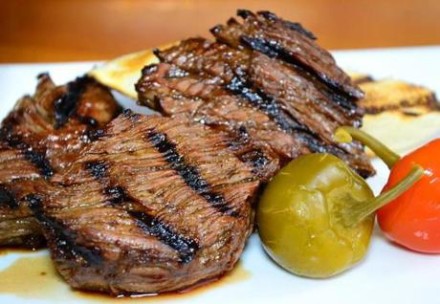
The Quiet Man steak tips photo by Debee Tlumacki for The Boston Globe
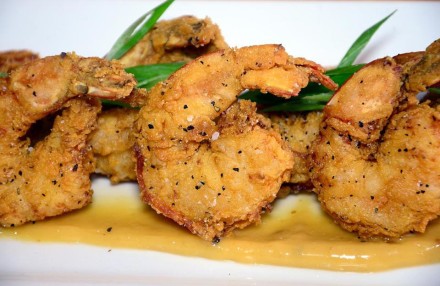
Just forget about the rock shrimp appetizer ($14): It’s out of this world. Seven large, perfectly cooked shrimp in an ultra-light, crispy batter are served with a garlic aioli and scattered scallion curlicues. The subtle, light parmesan vinaigrette on the Bibb salad ($9) clues you into the fact that the thicker, more commercial-style dressing served with the salad that sides the Quiet Man steak tips ($20) is an exact replica of Lynch Delaney’s father’s well-loved original. These juicy tips are served with a pickled pepper, a hunk of grilled bread, and either rice or what turn out to be world-class French fries.
A mountainous, double patty wagyu cheeseburger ($15) is speared together with a pickle-pierced skewer and layered with special sauce, cheese, tomato, and lettuce. It’s an irresistible Guy Fieri-sized sandwich that delivers a soul-satisfying fast-food flavor with high-quality ingredients.
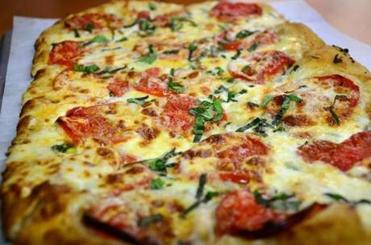
Margherita pizza photo by Debee Tlumacki for The Boston Globe
16C could justify itself on its pizzas alone. I’m thinking they’re the best around: Big rectangular sheet pies served with lots of topping combos. We loved the Margherita.
On a third, Saturday night visit, the grilled salmon ($24) has a nice finish and the farro salad that sides it is fresh and clean-tasting. The only dish on three visits that was merely good was the chicken under a brick ($24).
Desserts at this place? You probably shouldn’t even think about them. I’m guessing there’ll never be a bad one: Lynch Delaney is a pastry chef! Homemade ice cream and gelato ($9) is four little pots, one flavor more delicious than the next: Mexican hot chocolate kicks you on the way down. Homemade cookies kill ($6), and a peach crostata with caramel sauce and homemade vanilla ice cream ($6) takes the cake.
]]>
Once a year, in September, Maria Rodrigues makes enough fantastically delicious hot sauce to last her family a year.
It takes a lot of peppers.
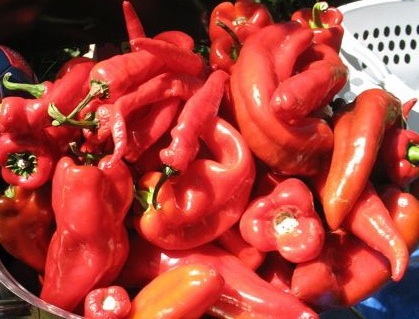
“I get four bushels – the long red ones,” said Rodrigues, who’s been making the sauce since she was girl in the Azores.
Having heard big raves about this hot sauce from a friend on the Cape, I visited Rodrigues in East Falmouth last week to see how she makes it.
Using tarps on the ground in her backyard, laundry baskets, and enormous bowls, Rodrigues starts the three-day process by washing the banana-sized red peppers with the garden hose. As they dry in the sun, she starts gutting each pepper, one by one, wearing plastic gloves (“I learned my lesson about wearing gloves the hard way,” she said).
Once all the peppers are cleaned, she puts them through a Cuisinart meat grinder along with 10 large bulbs of garlic. She then mixes two pounds of kosher salt into the resultant mash, covers the bowls, and leaves them overnight.
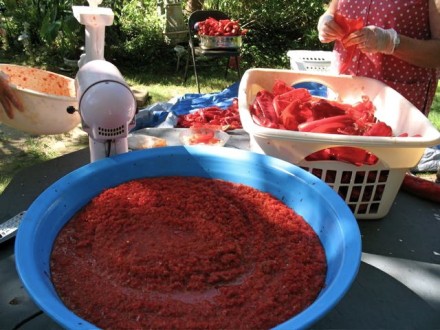
The next day, Rodrigues divides one quart of extra virgin olive oil among her enormous bowls of pepper mash. Again she stirs and covers them and leaves them to sit for another night.
By day three, the mixture has begun to ferment.
As she spoons across the top of one of the bowls, little bubbles trail along the surface.
“See, it’s fermenting,” Rodrigues said.
By the end of Day Three, Rodrigues ladles her fiery sauce into assorted gallon and quart bottles. She then covers the surface of each container with a little salt and a bit more olive oil. Finally, she screws on their lids — lightly — and puts them in her extra refrigerator where they will keep beautifully until next year.
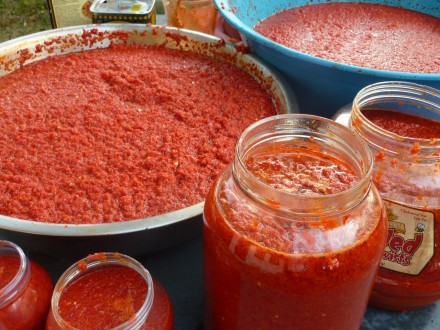
“You have to keep the tops loose for a few days so they don’t explode,” she said.
Explode?
“They keep fermenting for a few days,” she said.
My friend, Meg Fitzelle, from Woods Hole, who introduced me to Maria, says you have to keep the lids loose for at least a week.
“Last year, I kept noticing there was red everywhere in the refrigerator, it was like a Hawaiian volcano that keeps oozing out lava,” said Fitzelle. “You have to keep the lid loose in the beginning.”
When I asked Rodrigues why her simple sauce keeps without spoiling for a whole year, she didn’t know. She doesn’t even know the name of the pepper, but says that you can go to any of the Portuguese markets in Fall River or New Bedford this time of year and tell them you “want the peppers for the sauce.”
What she does know is that she’s been making and eating this sauce for more than 40 years, and it’s never made anyone sick.
“I don’t know what it is, we never had food poisoning. This is what I do and my sister does it the same way,” she said.
What does she eat it on?
Almost everything, and you can’t blame her, it’s so good. I’ve never much liked hot sauce, but this is delicious. I’ve eaten teaspoonfuls on chicken and scrambled eggs. The flavor is simple: it has the taste of sweet red peppers but the heat of hot ones and a texture similar to apple sauce. And unlike all the recipes I see for hot sauce, or the ingredient lists I read on brands, there’s no vinegar in Maria’s sauce, which is what I like most about it.
“You broil or fry fish and put not even a tablespoon on top,” she said. “We marinate meat with it too. Or, I’ll come home from work and fry an egg and in another pan fry garlic and the sauce in some oil and put it on top. My daughter eats it with butter on a round bread I make out of corn and wheat flour. We didn’t eat it that way growing up.”
When Rodrigues was a kid, her aunt didn’t even refrigerate the sauce. Instead, she covered the top of each bottle with a layer of olive oil, a layer of cheesecloth, and a layer of salt. These preserved bottles of hot sauce were stored in the dark and lasted throughout the year.
Rodrigues also preserves a small number of peppers whole. She fills the inside of the cleaned peppers with lots of salt, pours salt all over them, and piles them all in a ceramic crock topped with salt. The crock gets covered and stored in a dark place, and keeps all year. When she wants to use some, she rinses and soaks the peppers in water, slices them, fries them, and serves them to Carlos, her husband, over steak.
My jar of Maria’s Great Hot Sauce has not exploded in the fridge, but I’m keeping the lid lightly fastened, just to make sure.
]]>
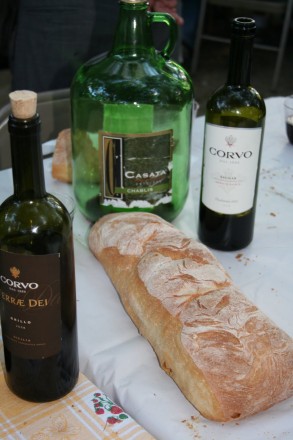
Today a small pine grove in Hingham erupted in picnic tables covered with food and hundreds of people.
The little-known annual celebration was the 51stlocal Festa della Madonna della Luce – the Feast of the Mother of Light.
After the procession reaches the park-like grove, at the dead end of the street, the Madonna is installed in a small open-air, stage-like building and a priest holds a mass in Italian. At one point in the mass, all the young children gather on the steps of the stage. As they sit, a woman tells the legend of the Mother of Light, the miracles she performed — her first was the saving of drowning boys — and how she came to be Palermiti’s patron. And the minute the story and the mass are over, the feast begins!
]]>
 I bumped into Paul Trojano today. He lives in Norwell, has a place in Vermont, owns Caffe Graffiti in Boston’s North End, and loves to forage for food.
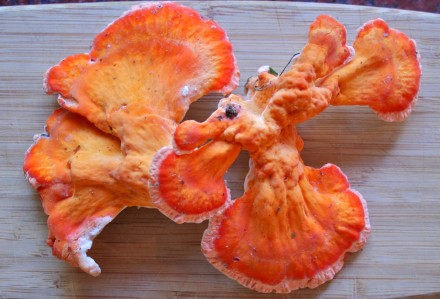
Look what he gave me.
They’re called Chicken of the Woods mushrooms. He picked them on Prospect Street in Hingham this morning. He also got oyster mushrooms there and black trumpets in West Chesterfield, N.H., on Saturday, the day before the hurricane (Irene).
Here’s his recipe for Wild Mushroom Risotto
8 oz fresh wild mushrooms such as Chicken of the Woods, Hen of the Woods, Chanterelles, Porcinis, Oysters or Black Trumpets
6 cups chicken or mushroom/vegetable stock
2 tbs. olive oil
1 1/2 tbs. butter
1 oz dry white wine to deglaze
1 medium onion, finely diced
1 1/2 cups arborio, carnaroli or vialone nano rice
S & P to taste
Finish: 2 Tbs. butter, 1/2 cup Parmigiano Reggiano, grated, white truffle oil (optional)
Slice or chop mushrooms depending on size and style of mushroom. Heat oil and butter and slowly saute mushrooms (Wild mushrooms must be cooked for at least 15 minutes), remove from heat and keep warm. Heat stock to a simmer. Heat oil and butter in a large pan and softly fry onion until translucent. Add rice and stir well. Add wine and stir. Slowly add hot stock a little at a time. Add more as the rice absorbs the liquid. This process should take about 20 minutes. Constantly stir to keep rice from sticking. About 15 minutes in, add sauteed mushrooms to rice and stock. The rice is done when it is soft on the outside, yet has a slight crunch at the center. At this point the dish should be creamy and fragrant. Remove from heat, finish by adding butter and cheese. Serve at once.
Serves four.
]]>
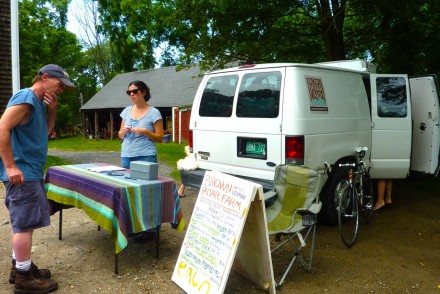 The road that leads to the truck that sells Vermont-raised heritage pork winds along a stretch of Cohasset’s North Atlantic that shames Beverly Hills with its mansions.
One after another, stone castles, Tuscan-inspired villas, ultramodern constructions, and old, wooden, 20-room houses lie like jewels set on a watery edge of sea grass and rock ledge.
Then a right, and another right into Holly Hill Farm, and there, in the barn yard, next to the horse corral and the farm stand, is the Brown Boar Farm truck.
People come from all over to buy Brown Boar’s pork at the farm one Saturday a month: not only because it’s so delicious, but because the pigs are humanely raised on a small, family farm in Wells, Vt.
The farm’s two heritage breeds — Tamworths and Berkshires — spend their time rooting around the 106-acre farm’s fields and woods for acorns, roots, tree stumps, and more. The farmers supplement the hog’s foraged diet with grain and whey.
Although these breeds love being outside, even in cold weather, they have free access to various shelters constructed throughout the farm, but are never constrained from being outside. Fresh spring water is available all over the property (which is fenced so the animals can be rotated among areas), and the pigs can give birth wherever they want: either inside on hay, or outside in nests they build from leaves.
Father and son Peter and Christopher Burrows, originally of Scituate, bought the farm in 2001. Christopher found it while studying farming at Green Mountain College in the next town over. The Burrows decided to start raising Tamworths after having bought a couple to clear overgrowth and seeing how happy they were when allowed to forage freely. Today, they have about 30.
Heritage is the term used to designate breeds of livestock that descend from various original breeds brought to America from Europe by the colonists. Tamworths and Berkshires have evolved to thrive in a climate like Vermont’s and are extremely hearty when allowed to live naturally.
Brown Boar’s South Shore sales are orchestrated by Peter’s daughter and Christopher’s sister, Scituate’s Meaghan Swetish. Swetish makes year-round, monthly deliveries to Holly Hill Farm and Plymouth Farmers Market. In the warmer months, she also sells at the Marshfield and Bridgewater farmers markets.
Swetish sends out mass e-mailings to let people know when the truck will be where — and to take orders. Ordering ahead of time helps the farm know how much of which cuts to bring, but Swetish says there is always extra for spur-of-the-moment shopping.
The taste of Brown Boar’s pork is not lost on the culinary world. Top Boston chef Barbara Lynch buys a whole pig (about 200 pounds) from Brown Boar monthly for use at one of her restaurants — The Butcher Shop. Lynch and company butcher the whole hog in house. Brown Boar also sells to other selected restaurants, including Scituate’s Oro.
The Burrows have their pigs slaughtered (generally two a month) at Eagle Bridge Custom Meat & Smokehouse — a humane facility about an hour by car from the farm. This means that after the farmers drive the animals there, they are treated well.
Experts say that an animal’s consciousness is very focused in the present moment and if given food and water upon arrival in a new place, it will stay calm and contented. The pigs are slaughtered that day with a bolt to the head that kills them instantaneously. As hard as this may be to ponder, it is a fact that humane slaughtering is a far cry more humane than the alternative.
“It’s as stress-free an experience for them as it can be,” said Swetish. “The whole operation at Eagle Bridge is transparent. Farmers are welcome to walk the kill floor and the whole place.”
Eagle Bridge also butchers the pigs, packaging and freezing every part of the animal, and makes the farm’s wonderful sausages.
“I’ve been driving down here for about a year,” said Michael Horan of Stoughton, while buying several different cuts at Holly Hill last month. Among Horan’s purchases were some heart, liver, and trotters — for his dogs.
The farm’s Italian sausage, both sweet and hot, is very popular. They come five to a one-pound package ($8) — one of the more costly items in a product line that is priced very competitively. They’re delicious. I use one or two sausages to add tremendous flavor to a simple marinara.
A little bit of fine meat goes a long way.
To get more information about purchasing locations, a pricelist, or to place an order to be picked locally, contact Swetish at meaghan.Swetish@brownboarfarm.com or 781 545-6065.
]]>
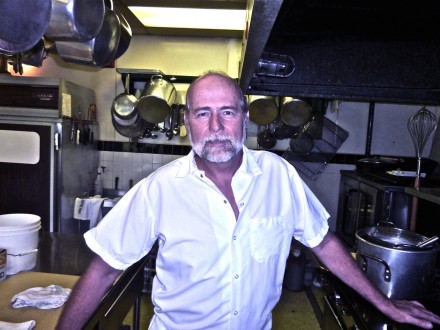
I’m standing in the large kitchen at Hingham’s Glastonbury Abbey talking to its head cook, John Gauley, when Father Tom, one of the monastery’s 12 Benedictine monks, pops in. I’m glad because although I’m here to talk about the food Gauley makes, I don’t know what monks actually do and now I can ask.
Father Tom, who is a priest as well as a monk, has been at the abbey for 42 years, and Gauley, who lives in Cohasset, for 24.
Father Tom explains that among their other duties, the monks gather daily for Vigils at 6:30 a.m., Lauds 75 minutes later, a noon Mass, Vespers at dusk, and evening Compline.
“We spend a long time in prayer,” he says.
“Not long enough,” says Gauley, who has a quip for every word Father Tom utters.
The monk laughs easily, then tells me about the brothers’ three vows: stability, conversion of life, and obedience.
“See, they have to tolerate me, it’s one of their vows,” says Gauley, who considers himself a Pagan.
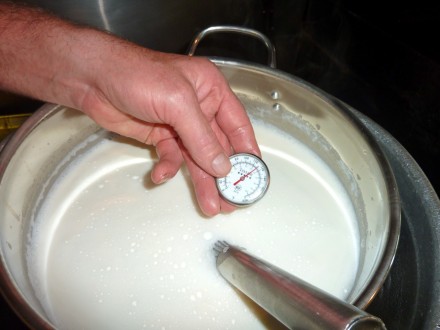
As the cook checks the temperature of a pot of goat milk on the stove (he’s making cheese), I ask Father Tom, out of Gauley’s earshot, how his cooking is.
“Monks from other monasteries want to stay here because of the food,” he answers. “We are very fortunate to have him.”
“Blessed,” corrects Gauley, who, apparently, has very good hearing.
In this case, the cook’s jest hits the mark: I think blessed is the right word.
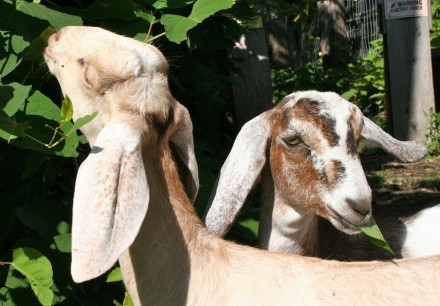
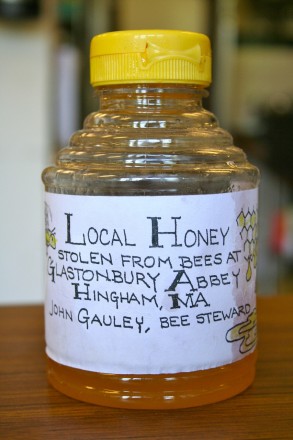
Gauley loves what he does, and goes above and beyond: He bakes fresh bread daily from a sour dough starter he keeps in a bucket in the walk-in (focaccia, oatmeal cranberry, multigrain); has been making his own honey for nearly two decades (300 pounds last year); and has begun, this year, to produce fresh chevre from the milk of the small herd of Nubian goats he began raising two years ago.
In all, there are five buildings on the magnificent 60-plus acre site, including a conference center which hosts hundreds of group meetings throughout the year. Along with the monk’s meals, Gauley, and his assistant, Ben Laney, cook for these events as well.
Not only that, but Gauley donates his time to prepare the Sunday Supper the Abbey provides for anyone needing a meal on the last Sunday of the month. Gauley also cooks a main course once a month that the monks take to Father Bill’s homeless shelter. And – when there’s extra – he sells his honey in the Abbey bookstore.
Seeing how Gauley runs the kitchen with dedication, routine, and a sense of service, I comment to Father Tom that Gauley is, in fact, rather monk-like himself.
“He is,” says Father Tom. “We’ve tried to get him to join the community, but he’s anti-this, and anti-that. We love him anyway — and his cooking. Although I wish he wouldn’t forget things: he makes these delicious things then forgets how he did it.”
Which is how Gauley likes to cook. Less by rote than by feel and daily inspiration. The goat cheese, however, requires very exacting measures quite unlike his usual creative approach.
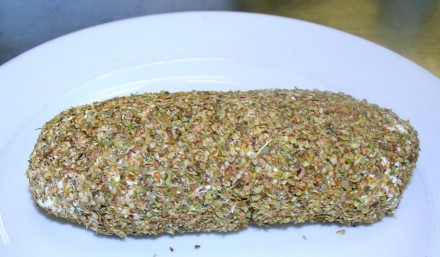
“It has to be pasteurized in a water bath to 160 degrees and cooled to 90 degrees… cheese is a lot more complicated than I thought,” says Gauley, who’s become quite expert on both cheese making and goat husbandry. It’s clear he likes the challenge, though, and his various chevres (one is herb-covered) are delicious: creamy, mild, and slightly zingy.
“This has been a learning year for the cheese,” he says.
Gauley’s eight goats live in a series of shacks and pens on an idyllic woodsy, rocky hillside 100-plus yards from the kitchen. He’s milking only one this season – Abby. Milked twice daily, she provides about three quarts a day. With this, Gauley makes cheese once a week, getting about four pounds from what is about five gallons.
The kitchen is the warm center of the monastery, with monks and volunteers running in and out of it delivering the big dishes Gauley cooks – or simply serving their brothers at table daily. It’s a nourishing, nurturing shelter of a place: a lively, light-filled room in the monastery adjacent to the bookstore and the rectory.
When I ask Father Tom if he has a favorite dish of Gauley’s, it is Gauley who answers.
“It’s a raw vegetable salad,” he says.
“Actually, it is,” says Father Tom. “I love that.”
]]>
You have to pity the poor hot dog.
Not since… I don’t know what… has something been so loved and hated at the same time.
Millions of Americans absolutely adore this virtual symbol of the quintessential American holiday yet denigrate them, and themselves, for eating them.
So, being an inveterate hotdog lover who’s devoured quite a few since the Fourth of July, I’m here to testify to the honorable culinary tradition from which they spring (in case you don’t know).
Hotdogs, members of the sausage family, are a type of preparation known as emulsified forcemeat and are related to such respected delicacies as pate, mortadella, and bratwurst — as well as many a lovely stuffing used in a number of foods.
Emulsified forcemeats are made by emulsifying lean meat, salt, water, and fat into a fine puree in the big bowl of a chopping machine. Ice is actually used, rather than water, since friction from the chopping causes heat, and the meat mixture must remain colder than 60 degrees or the fat will separate from the protein (think water and oil).
Even though I’ve long since gotten wise to the amazing fact that the South Shore seems to have at least one of every type of great culinary creator, I was still surprised to find that we have a master sausage maker!
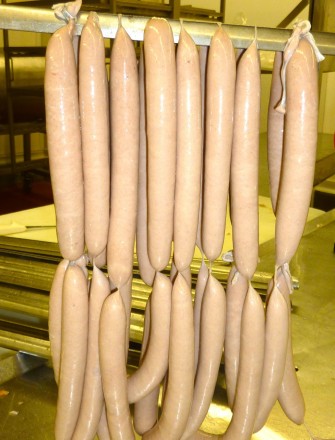
Hingham native and resident Dave Nosiglia, owner of the Smokehouse retail store in Norwell, manufactures about 70 types of sausage and smoked specialty meats at his small processing plant in Mattapan, including a fantastic classic hotdog he calls a wiener. Nosiglia learned his trade in Germany where he apprenticed for three years soon after graduating from high school in the late ‘70s.
Nosiglia’s hot dogs are an emulsification of lean hindquarter beef, water, and fresh ground pork fat (not some sort of processed lard, in case that’s what you’re imaging). Salt and spices (including white pepper, paprika, nutmeg, and all spice) are also added to the mix, which is then shaped inside natural casings, cooked in a hot smoker, and cooled.
“It’s like making a bread dough — then after they’re cooked, they’re like bread,” said Nosiglia about his hot dogs.
I didn’t quite get this until I watched him make his wieners.
The hotdogs are made in an enormous chopper that has a bowl that rotates as the mixture works — a lot like dough in a Kitchen Aid. The beef, ice, and spices are added to the chopper first and processed for several minutes before the fat is added. Sodium nitrite – a curing, preserving agent – is also added. If you don’t like the idea of nitrites, Nosiglia also makes an organic wiener in which a costly freeze-dried celery juice powder is used in its place.
As the meat “dough” gets close to being the right consistency, the sausage maker pokes it repeatedly to see how it’s coming (like you would a bread dough). At one point, near the end, after adding a bit more ice, he shuts off the machine and it’s done.
From there, the mixture is transferred to another machine that forces it through a die into a long length of natural casing. Workers, then, somehow twist and twirl the casing to create individual links. And, finally, after a large stainless rack is filled with wieners, the whole thing is rolled into the smoker, which looks a bit like a walk in refrigerator, where they get smoked in beechwood and cooked for about three hours.
Nosiglia sells his wieners and many of his meat specialties wholesale throughout New England. His only retail outlet is in Norwell, although Mary and Robert Gonsalves, who love Smokehouse products, sometimes sell them at their wonderful shop, Bloomy Rind, in Hingham Square.
“I would fight for the hotdog – I love good hotdogs,” said Gonsalves, getting right into it when I stopped into his shop a couple days ago raving on about the wieners from the Smokehouse. Gonsalves, a graduate of the Culinary Institute of America and a brilliant chef, was the executive chef of Todd English’s celebrity restaurant empire for 12 years, and knows whereof he speaks.
So, while there are indeed crummy hot dogs out there, a good one is a thing of beauty and a preparation that takes skill to do well.
So pity the hot dog no more but give it its rightful due.
Hear! Hear!
]]>
Sometimes strawberries aren’t only summer’s first mouthwatering fruit.
Sometimes they’re double agents.
Dressed up as the starlets of shortcake, for instance, they also serve as good will ambassadors and friend-makers.
Take their role in last weekend’s Strawberry Festival, put on by the Second Congregational Church in conjunction with the 56th Annual Arts Festival in Cohasset.
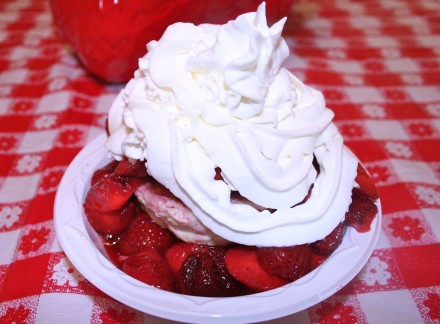
Strawberry shortcake was the reason to say “Hi: My name is Joni, I live in the next town over.” Or, “Hell-o. We’re the Smiths, we just moved here;” or, simply, (for a start), “Two strawberry shortcakes, please.”
Like food the world over, strawberries – this month’s seasonal darlings — have the magnetic drawing power to bring people together.
“It’s about participation, really, getting to know people,” said Jack DeLorenzo, chair of the Strawberry Festival committee. “That’s how we got to know people when we came here – a ham and bean supper.”
Along with its function as something fun to do, the strawberry festival, which has been ongoing for at least 20 years, raises money for the church’s chosen charities. It isn’t as much money as it could be, though, since the organizers haven’t raised the price for years: A large bowl of local strawberries, shortcake, and whipped cream goes for $5. This year, about 40 volunteers, working for five days, made 2,200 bowls of strawberry shortcake.
Across the vast Cohasset town common – covered with craft booths, tents filled with fine art, and food stands, the First Parish Unitarian Church was doing their version of the strawberry festival at its ninth annual Lobster Roll Sale.
“Last year we did 1,200 rolls, this year, 1,100 and something,” said Art Myles, who co-chairs the sale with his wife, Penny, along with the help of 60 volunteers.
The $13 lobster rolls, which come in brown paper bags with potato chips, are a no frills sandwich made with only lobster meat and mayo on a hot dog bun. And, they’re delicious – if small – but it isn’t really the roll that people are after. And, while it’s true that part of the draw is a coming together to raise money for charity, that’s not the real riches the lobster sale produces. More than anything, buying the lobster rolls and the strawberry shortcakes, year after year, builds community. And community –- that sense of caring for; being cared for; and feeling a part of something bigger than yourself — makes life rich.
Which is why a bowl of strawberry shortcake or a small lobster roll from the festival is so special to so many.
“We had a woman call from as far away as Virginia,” said Penny. “She put in an order for 10 for tonight.”
Both churches add to their outreach by taking orders and delivering their respective dishes to local businesses on the Friday of the festival weekend.
“I did all the delivery,” said DeLorenzo, who brought bowls of strawberry short cake to about local 30 businesses on Friday afternoon. “It was the most popular I’ve ever been!”
It’s not easy to spot the food sales at the two churches – located on either side of the action packed green. But, if you don’t partake, you won’t be left hungry by any means.
About a half dozen good food stalls attend the festival.
Some – like Dave & Jerry’s — have been doing the arts festival for about 15 years. The two men sell trolley dogs and Italian ices and other foods, and have attracted their own following at the festival.
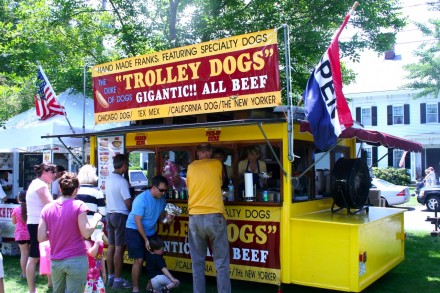
“They have the best French fries in all of New England!” volunteered Amy Abel of Kingstown, R.I. “We come every year. This must be our 20th year. It’s an annual outing for us. We love it.”
The Arts Festival is a serious art and craft show with a fine reputation.
But it could never be a festival if it weren’t for the food. Without the food, it would be an art show.
Food fills the weekend event with the sensuality of fresh juicy strawberries, lobster meat, French fries, and more. Food answers the eternal call with the exciting possibility of something special to eat, just for you.
]]>