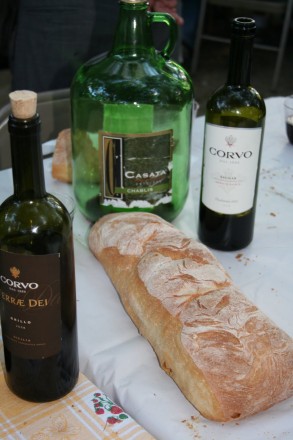
Today a small pine grove in Hingham erupted in picnic tables covered with food and hundreds of people.
The little-known annual celebration was the 51stlocal Festa della Madonna della Luce – the Feast of the Mother of Light.
After the procession reaches the park-like grove, at the dead end of the street, the Madonna is installed in a small open-air, stage-like building and a priest holds a mass in Italian. At one point in the mass, all the young children gather on the steps of the stage. As they sit, a woman tells the legend of the Mother of Light, the miracles she performed — her first was the saving of drowning boys — and how she came to be Palermiti’s patron. And the minute the story and the mass are over, the feast begins!
]]>
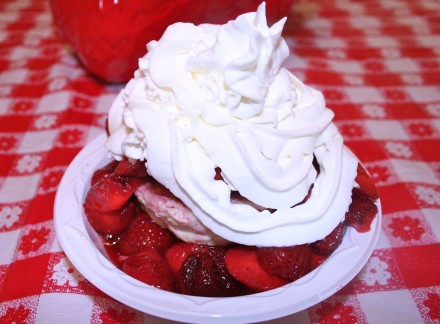
Sometimes strawberries aren’t only summer’s first mouthwatering fruit.
Sometimes they’re double agents.
Dressed up as the starlets of shortcake, for instance, they also serve as good will ambassadors and friend-makers.
Take their role in last weekend’s Strawberry Festival, put on by the Second Congregational Church in conjunction with the 56th Annual Arts Festival in Cohasset.
Strawberry shortcake was the reason to say “Hi: My name is Joni, I live in the next town over.” Or, “Hell-o. We’re the Smiths, we just moved here;” or, simply, (for a start), “Two strawberry shortcakes, please.”
Like food the world over, strawberries – this month’s seasonal darlings — have the magnetic drawing power to bring people together.
“It’s about participation, really, getting to know people,” said Jack DeLorenzo, chair of the Strawberry Festival committee. “That’s how we got to know people when we came here – a ham and bean supper.”
Along with its function as something fun to do, the strawberry festival, which has been ongoing for at least 20 years, raises money for the church’s chosen charities. It isn’t as much money as it could be, though, since the organizers haven’t raised the price for years: A large bowl of local strawberries, shortcake, and whipped cream goes for $5. This year, about 40 volunteers, working for five days, made 2,200 bowls of strawberry shortcake.
Across the vast Cohasset town common – covered with craft booths, tents filled with fine art, and food stands, the First Parish Unitarian Church was doing their version of the strawberry festival at its ninth annual Lobster Roll Sale.
“Last year we did 1,200 rolls, this year, 1,100 and something,” said Art Myles, who co-chairs the sale with his wife, Penny, along with the help of 60 volunteers.
The $13 lobster rolls, which come in brown paper bags with potato chips, are a no frills sandwich made with only lobster meat and mayo on a hot dog bun. And, they’re delicious – if small – but it isn’t really the roll that people are after. And, while it’s true that part of the draw is a coming together to raise money for charity, that’s not the real riches the lobster sale produces. More than anything, buying the lobster rolls and the strawberry shortcakes, year after year, builds community. And community –- that sense of caring for; being cared for; and feeling a part of something bigger than yourself — makes life rich.
Which is why a bowl of strawberry shortcake or a small lobster roll from the festival is so special to so many.
“We had a woman call from as far away as Virginia,” said Penny. “She put in an order for 10 for tonight.”
Both churches add to their outreach by taking orders and delivering their respective dishes to local businesses on the Friday of the festival weekend.
“I did all the delivery,” said DeLorenzo, who brought bowls of strawberry short cake to about local 30 businesses on Friday afternoon. “It was the most popular I’ve ever been!”
It’s not easy to spot the food sales at the two churches – located on either side of the action packed green. But, if you don’t partake, you won’t be left hungry by any means.
About a half dozen good food stalls attend the festival.
Some – like Dave & Jerry’s — have been doing the arts festival for about 15 years. The two men sell trolley dogs and Italian ices and other foods, and have attracted their own following at the festival.
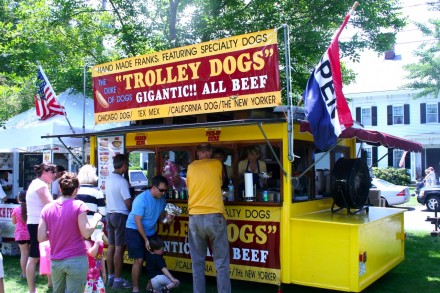
“They have the best French fries in all of New England!” volunteered Amy Abel of Kingstown, R.I. “We come every year. This must be our 20th year. It’s an annual outing for us. We love it.”
The Arts Festival is a serious art and craft show with a fine reputation.
But it could never be a festival if it weren’t for the food. Without the food, it would be an art show.
Food fills the weekend event with the sensuality of fresh juicy strawberries, lobster meat, French fries, and more. Food answers the eternal call with the exciting possibility of something special to eat, just for you.
]]> I saw the future of South Shore dining last weekend and it was moving.
Literally, moving.
Restaurants on wheels – food trucks – are getting major support from the Boston City Council, which passed an ordinance in April to expand access to them. More recently, legislators opened up the first batch of locations throughout the city for about 30 mobile eateries, and — like mushrooms after rain — the trucks are sprouting up everywhere.
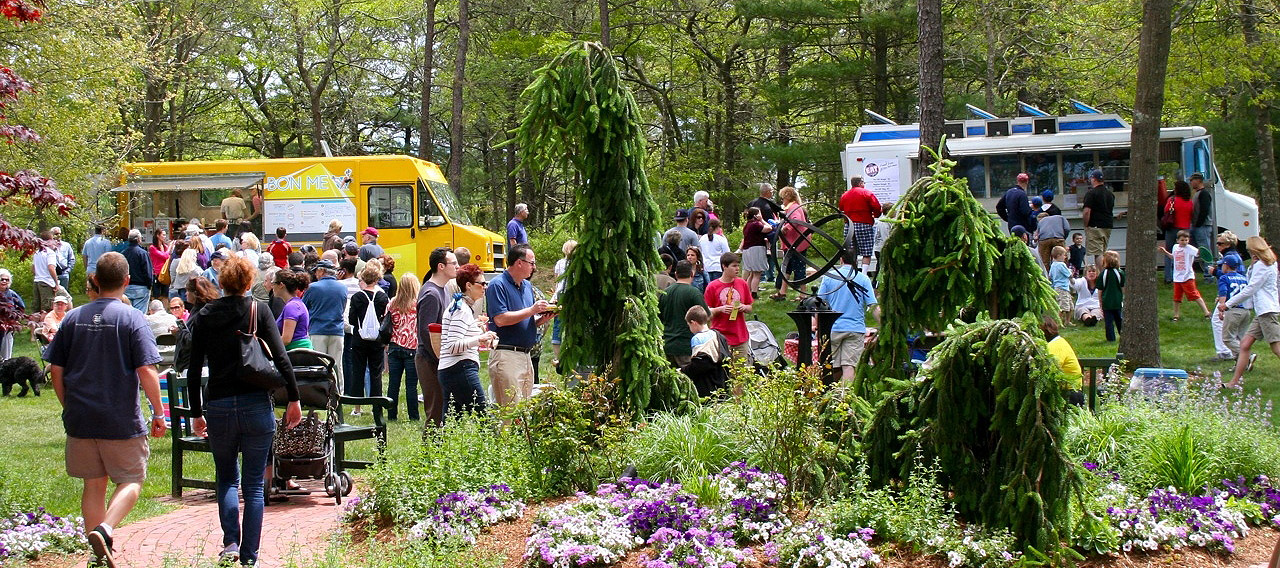
And last Saturday in Plymouth, there was The Fabulous Food Truck Festival.
Circled around the green at Pinehills Village, a half-dozen mobile restaurants created something akin to an instant, gourmet food court.
At midday there were at least 60 people in line at all the more unusual, new trucks like Bon Me, The Eat Wagon, and Grilled Cheese Nation.
Summer Shack’s Clambake on Wheels, The Froyo truck, and Kick Ass Cupcakes were also crowded, and although standing around on a beautiful day isn’t the worst way to pass time, I just didn’t have the patience.
If, however, I could walk up to a truck at a local park or parking lot and get a rice noodle salad for $6 — the way I now get a hot dog from the hot dog cart at Hingham’s Bathing Beach — I’d be there every day.
 That said, I did, actually, weasel my way to the front of the line and into a delicious sandwich from Grilled Cheese Nation.
Like all the truck menus, partners Todd Saunders’ and Ron Sarni’s bill of fare is smartly small. I chose a delicious Gouda grilled cheese with caramelized onions and mushrooms, called In Gouda We Trust.
What makes the food truck phenomenon so exciting is that most of the food is fresh, innovative, and inexpensive.
Trucks are the new world for many young chefs coming up in a scaled-back economic climate flavored with environmental concerns. Their passion to make beautiful food, channeled through the times and the trucks, is resulting in simple yet sophisticated dishes made from high-quality — often organic and/or locally sourced — ingredients.
Saturday’s fare included burgers and hot dogs from grass-fed beef; cheeses from local producers like Smith’s Farmstead; organic breads from Iggy’s; and brown rice with tofu and shiitake mushrooms.
 The trucks share a hip, no-frills, utilitarian style and depend on free, online marketing via websites, Facebook, and Twitter (Bon Me’s website identifies its trio of owners as “Ali (the Chef),” “Asta (the Trucker),” and “Pat (the Numbers Guy)”.
I don’t know the pedigree of all the chefs and cooks behind Saturday’s trucks, but I do know that Bon Me’s Ali trained at the country’s foremost cooking school – the Culinary Institute of America — and that Boston chef and James Beard nominee Will Gilson co-owns The Eat Wagon along with Aaron Cohen, the guy behind Twitter’s “Eat Boston.” (Nearly 16,000 people follow Cohen’s Tweets about where to eat in Boston.)
Grilled Cheese Nation owners Saunders and Sarni have also launched Food Truck Nation, a support organization for food truck owners and wannabes. The organization represents one of the food truck manufacturers, which could make it easy for newcomers to get in on the scene. Sarni is also the founder and president of the Boston Area Food Truck Association (BAFTA), which has 50-plus members who are extremely active.
“I’ve never seen a group of people working so hard to help each other. We’re trying to collectively launch an industry here. Our goal is to make Boston the best food truck city in America,” said Sarni.
Tricked out food trucks start at around $60,000 and average upwards to $150,000.
“The low cost, allows young culinary professionals to start a truck and make their mark,” said Sarni, who expects Boston to see a couple dozen food trucks this year and maybe as many as 50 next year.
He also thinks it’s inevitable that the phenomenon will be coming our way once it’s really up and running in Boston.
I’ll be waiting.
Think of the work it takes to make a good, simple dinner.
Then imagine doing that times 100 from morning to late at night, sometimes seven days a week, holidays absolutely included, often working in small, very hot spaces in close proximity to a crew of other petal-to-the-metal cooks.
Forget about routine family life, free time, hands unblemished by burns and cuts — and you’ve got a vague picture of the chef’s life. So, how and why do they do what they do?
Must be love.
That love of food -– and the talent that inspires it — was on display front and center at last week’s “A Taste of the South Shore” – a rock concert of a food fund-raiser for the YMCA.
Well before the 6 o’clock start, dozens of vans and trucks circled into Lombardo’s event facility in Randolph, and workers from 25 food establishments unloaded tons of equipment with the can-do-anything prowess of roadies. Taking their show on the road meant transporting all the food – down to every little garnish – and a kitchen’s worth of pots and pans and butane burners; serving, display, and setup items; tablecloths, signage, menus, flowers, and more.
When the work was done, the circumference of the enormous ballroom (so large it dwarfs three vast ceiling chandeliers with 15-foot diameters) was ringed with food: A continuous edging of tables, covered with dishes ranging from the good to the spectacularly delicious, spread all the way around the room.
As the chefs and cooks manned their stations to greet and serve guests, upwards of 500 arrived; ascended Lombardo’s dramatic, glass-enclosed spiral stairway; found their place at one of the large tables; and went off to forage for food!
Despite the large crowd, there were no lines at the stations. Eating whatever you wanted was as easy as reaching for a plate of anything, and I mean, anything – from delicate haute cuisine appetizers to gorgeous roasts and potatoes.
 I ate Island Creek oysters on the half shell; yellowfin tuna tartare [shown here]; sirloin crostini with truffle oil; peanut lo mein noodles, sushi; salt cod with whipped potatoes; boneless short ribs (at least four places served them); fried green tomatoes with bacon: beef tenderloin garnished with edible orchids: brown rice vegetable salad: crab and shrimp cakes; cappuccino, ricotta pie, grapes, and strawberries.
A couple hours into the evening, Y officials and friends took to the podium and honored architect and longtime YMCA supporter John Sheskey. The presentation was heartwarming as speakers verbalized the good will and generosity of spirit of Sheskey and everyone who works to support the YMCA, including the chefs.
John Boucher, of South Shore Savings Bank, had it right.
“It’s all about the food,” said Boucher. “We never have any problem getting people to come here because of the food.”
Which is just what I’d been thinking. In fact, at that very moment, I’d been wondering why all non-profits don’t just do this: Get a bunch of phenomenal chefs to donate their time and food so it can sell tickets and raise money?
The event netted more than $80,000 for the YMCA – money that will enable it to continue providing families with membership assistance and scholarship subsidies for all its programs in Quincy, Hanover, and its summer camp on the Cape.
And the whole $100-per-ticket fund-raiser was built around the draw of the 25 establishments that contributed their food.
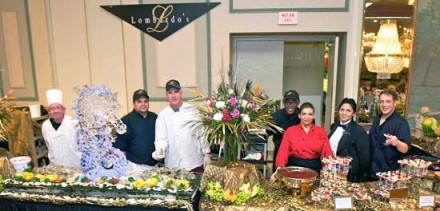
Just before the presentation, the chefs and cooks gathered for a group photo before being sent off to relax and have a drink in the big lobby area. The crowd gave them a standing ovation – with some shouted bravos, hoots, and hollers.
The success and draw of the event was a powerful show of force by a community of South Shore restaurants, chefs, and food businesses that has grown enormously since the event began 14 years ago.
Here’s a list of them: Atlantica, BonCaldo, Caffe Tosca, The Chef’s Table, Coffee Break Café, Dancing Deer Baking Co., Fratelli’s Pastry Shop, Freeport Tavern, Fuji 1546 Restaurant & Bar, Granite Grill FX, Hancock’s Steak House, Jasper White’s Summer Shack, Kama Lounge, Konditor Meister, Lombardo’s, Malai Thai Restaurant, Neighborhood Club of Quincy, Phillip’s Candy House, The Red Parrot, Salsa’s Mexican Grill, Scarlet Oak Tavern, Star’s on Hingham Harbor, Tosca, Whole Foods Market, The Winery on 53.
]]>
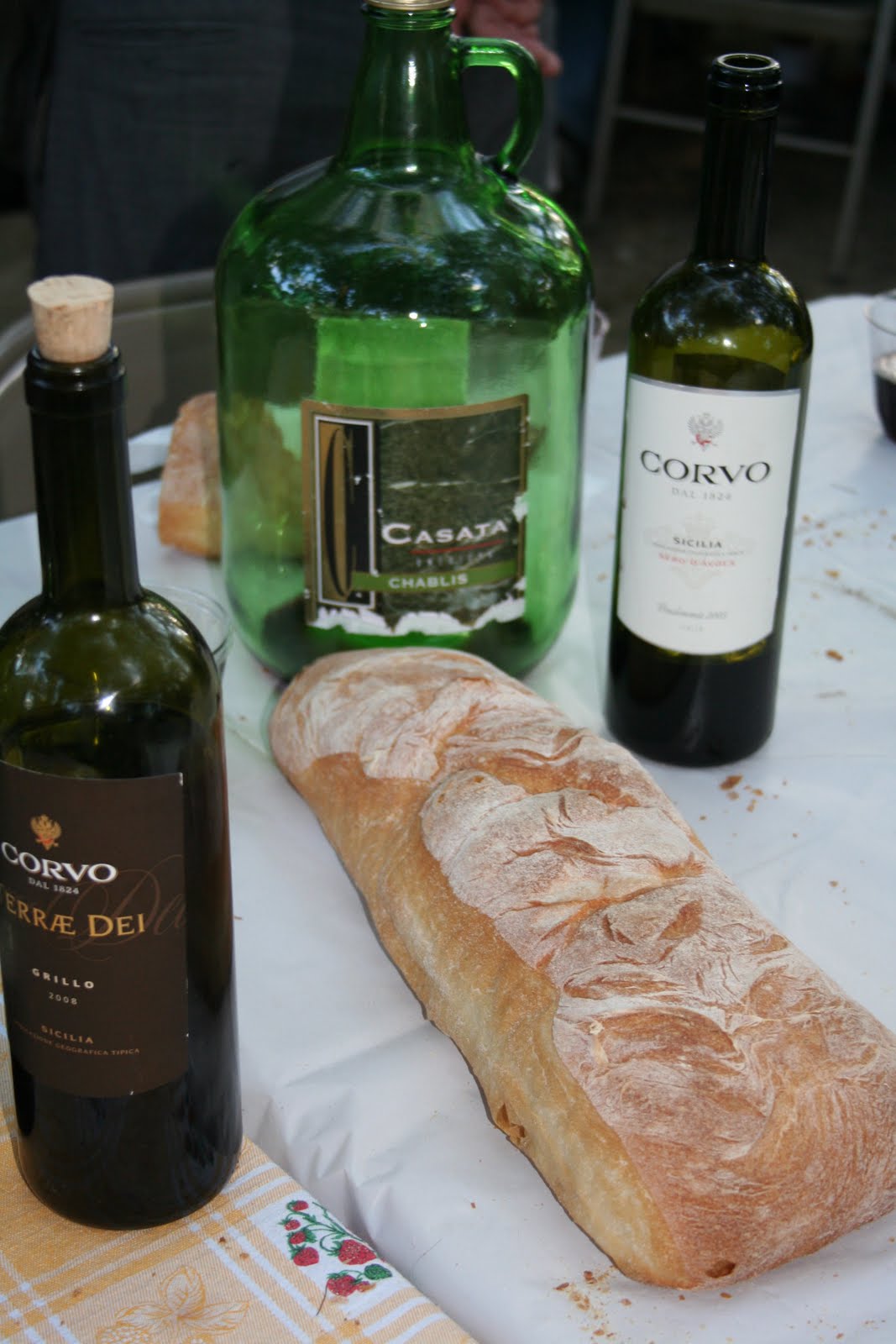 Last Sunday a small pine grove in Hingham erupted in picnic tables covered with food and hundreds of people.
The little-known annual celebration was the 51st local Festa della Madonna della Luce – the Feast of the Mother of Light.
After the procession reaches the park-like grove, at the dead end of the street, the Madonna is installed in a small open-air, stage-like building and a priest holds a mass in Italian. At one point in the mass, all the young children gather on the steps of the stage. As they sit, a woman tells the legend of the Mother of Light, the miracles she performed — her first was the saving of drowning boys — and how she came to be Palermiti’s patron. And the minute the story and the mass are over, the feast begins!