I’m not much of a baker, but I have a few confections in my repertoire, and apple pie is what I make this time of year. I’ve been using the same, all-butter pie crust recipe for 20 years.
There are some things in life I can’t fathom.
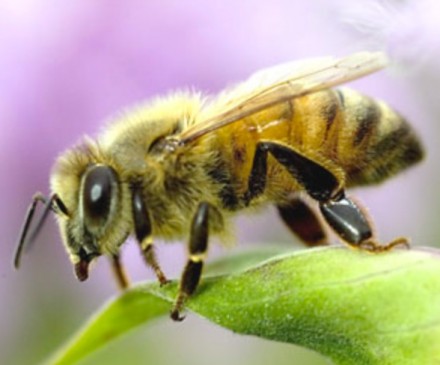
For instance, how can honey bees do all they do?
I mean, consider the half-pound of honey on my kitchen counter here in my new house in Miami and ponder this: One bee, in her life, contributes a total of only about an eighth of a teaspoon!
No wonder the poor queen lays upwards of 2,000 eggs a day and the average hive has 40-50,000 bees.
In defense of their low production levels, however, I will say that honey bees live, on average, only six- to 12-week lives — albeit action packed, achievement oriented ones no doubt filled with the satisfaction of work well done, camaraderie, and community. Being small of scale, I like to think that the spatial and temporal realms somehow coincide and that those mere weeks feel like a lifetime to them.
A lifetime of hard work, I hasten to stress, in that each bee assumes a number of jobs, moving, as they age, from one form of bee work, to another, including, but not limited to, cleaning the hive, rearing the young, guarding the queen, processing honey and pollen, foraging, and fanning the hive to keep the temperature right. In fact, many bees die because their little wings wear out: wear out! Well, it’s little wonder what with all they do.
Not only all this, but on top of everything else, they perform a Nobel prize-winning caliber of service to mankind while gathering the nectar that, mixed with their stomach enzymes, eventually evaporates into honey. As they move from blossom to blossom (their best job in my opinion), they pick up one plant’s pollen and (accidentally) deposit some on the stigma of other plants’ blossoms.
Experts say that about one-third of the world’s crops are pollinated by bees. One. third. of. the. world’s. crops.
So, these little worker bees, which are all female, by the way (the males, known as drones, are there only to mate with the queen once a year), perform a catalytic action absolutely required for food to grow.
On top of everything else, the fruits of their labors are uniquely delicious, health giving, and even medicinal.
According to Bee Lessons, a wonderful little book written by Boston-area bee keeper Howard Scott, the life of a bee is an incredible tale of devotion to the hive, cooperation, division of labor, instinct, and love.
But how do they know how to do all they do?
What clues them in, for instance, to knowing when the time is right to transition from one bee job to the next?
I’m doing that now: I’ve just left everybody and everything I know and all I’ve worked at and moved (as I said) to Miami.
I was hesitant to make the change.
I’ve loved living on Boston’s South Shore and writing about food. Through the work, I’ve discovered amazing things I would never have found otherwise. It’s hard to let go.
Do bees get attached to their last job?
I doubt it but maybe they do.
Maybe they buzz back to the old cleaning station a few times before remembering that they’ve become queen protectors.
It’s going to take me longer than that.
Bees do everything faster.
]]>

Taste is such a complex affair.
People perceive the flavors in a dish based not only on the balance of ingredients its cook has assembled, but with an emotional sensibility unique to each individual. Flavors ring bells, causing unconscious sense memories to zip around our mind-body like atomic-sized pinballs, affecting how we like the taste of something.
I’ve been fascinated by this for a while, but had been having it confirmed in my thinking last week while reading a great book, “The Flavor Bible,” by Karen Page and Andrew Dornenburg, and found myself at Natale’s men’s clothing store in Hanover with my husband.

After some time shopping around and talking with owner Nat Agostino [pictured], he offered us a coffee.
Agostino, as it turns out, is passionate about espresso, and I understand that because I’m ridiculously particular about coffee myself: I don’t like most coffee that comes my way, and if I don’t love it, I’d rather not have it.
Which is why I initially declined Agostino’s offer. But, then, when I saw the thick crema on the espresso he served my husband, I got interested.
My curiosity piqued, I had to know how he made it. Which is how I ended up in Agostino’s light-filled office, refusing his coffee a second time.
Why?

Because I saw that his beautiful electric (Alma brand) espresso machine uses coffee pods, and I was sure that pre-packaged pods could never produce a vivid cup of coffee. (I’ve tried dozens of pods to no avail.)
“I’m sorry. I don’t like the taste of coffee made from pods,” I told him. “So, no thank you.”
But Agostino was unfazed by my comment; reaffirmed that his Giusto coffee was the best; and stood ready to make me a cup.
But Calabrese, it seems, are not known to be hardheaded for nothing (Agostino was born in, and I’m descended from, the Southern Italian Province of Calabria): I did not want an espresso I wouldn’t like, so I said:
“You know why I won’t like the espresso and you do? Because taste isn’t based only on objective flavors, but on memories and emotions and experiences that affect what tastes good to us. You’re used to this coffee and it’s delicious to you, but I won’t like it.”
I felt comfortable with this man and I really said that to him, wagering that he’d be interested in the phenomenology of individual taste and find it fun to ponder. I knew, from our conversation, that he had traveled widely. And his magnificent store and personal gentility made me think he’d have something to say on the subject.
But, he didn’t acknowledge my words.
Instead, he continued to insist that his coffee was delicious, and that I should try it.
So, taken as I would be by anyone that passionate about coffee, I had a cup.
And he was right, it was delicious – a smooth, thick blend of bitter and sweet. Really, seriously great.
He was pleased.
“My philosophy is you give the best in life to people,” said Agostino. “When I make a cup of coffee, I make it with love. I really do.”
We spent quite a bit of time, then, talking about coffee. He told us that in 60 years, he’s never had so much as a single cup of American coffee. He remembered a particular, awful espresso he was served once in Paris at Charles de Gaulle Airport — and the best coffee he’d ever had in his life: a cup made by two guys in the street in Beirut, Lebanon.
Two days later, I stopped by the shop to take a photo of his coffee. While he was making it, I asked him, again, if he could understand my fascination with how each of us likes the flavor of different dishes – and coffees — based on unique experiences that affect our sense of taste.
And he said that he did understand – and went on with great humor and joy to recount how his friend, Angelo Sodano, makes Neapolitan coffee in a little pot on a hot plate, near the bathroom, in the back of his foreign cars store in Quincy, even though he also has an electric Alma machine Agostino gave him.
“I wonder why,” I said. “It must be because that’s what he’s used to, what tastes good to him.”
And then, Agostino gave me the gem I’d been after: the confirmation I’d been hoping to undercover in his experience.
“I agree with you,” he said. “I’ll tell you a story. As a young boy, we didn’t have money to buy coffee, but we grew orzo [barley] and my mother roasted it dark [in a frying pan over a wood fire] and ground it and made coffee with it and it was delicious. And that coffee that I told you I had in Beirut in the street from those two guys — the best coffee I ever drank in my life — it was exactly like my mother’s.”
So, wonder of wonderful story of stories: The coffee he remembers as the most delicious of his life reminded him of his mother’s grain coffee!
Bravo our mothers, our memories, and the love that lives in our taste buds.
Follow Joan Wilder on Twitter.
]]>Don’t ask.
I can’t believe it either.
All winter, I long so for the warm months that it seems crazy to miss it when summer and its foods are in full swing: tomatoes warm off the vine, basil thick in my garden, green bean salads, baby cukes, sautéed zucchini with new garlic and olive oil, watermelon and feta salad!
Summer food is light like the weather.
June, July, and August on the North Atlantic are so rich with life – so lush and green and growing — most people thrill to each sunrise. It’s day after day of easy living, with little between you and your makes but a thin film of cloth and strip of leather.
Houses — airtight through winter – dress down, too. We sleep with all the windows up in our house (on the Weir River estuary) and sea smells fill the air equally inside and out. I hear small animals rustling in the night. When the moon is full, it’s light in the house, and I get up sometimes and watch the river, unafraid in the friendly night.
I couldn’t cherish summer more.
Winter is so radically different it takes a powerful imagination to even conjure it up in the heat we’ve been having. Old home videos help. Where everything was green — there’s nothing. Night falls at 5 p.m., or earlier. No wall of vegetables and colored plants tower above the garden beds. It’s frozen hard and serious: you know you can’t survive in a tent eating tomatoes.
Still, sometimes, I get feelings like I did the other day.
They’re quick — triggered by a cool breeze or the smell of the fireplace ash I spread in the garden. They’re flashes of longing for winter and the secure feeling of being all tucked in and warm at home: socks and sweaters on; a hot soup or stew cooking; the quilt from our bed dragged down to the couch — a good book late into the night. The house shut down and locked up tight; everyone safe from the storm.
And this missing of winter hits at other times, too: spying frozen entrees in a local food shop the other day I had an impulse to stock up on supplies — as though I were one of the squirrels whose nuts I once found in my bike bag in the garage.
I sometimes feel it on rainy days, too: a longing for something deep and quiet — even if cold and bleak.
It’s like having two lovers, summer and winter, and not being able to understand how you could possibly be in love with two such totally different people. I want to deny winter and be unreservedly pro-summer: I don’t want my tomatoes to die, I don’t want the river to ice over, I don’t want the trees to lose their leaves — and then again, I do.
Talking food with a friend recently, I was happy to realize that I’m not alone.
“I got such a craving for cabbage and bean soup the other day,” she said. “You know the one I make with the rosemary? I’ve got the stock frozen and ready, but it’s too hot for a soup like that. I’ll have to wait and make it in the fall.”
“Yeah,” I said. “That’ll be good.”
]]>One would eat hot dogs, but only with catsup, while it was mustard or nothing for another. Plain pasta for one, sauced for the other two. One of us liked only the yolks of eggs, another only the whites: buttered corn, plain corn. Until six, I wouldn’t touch cheese: after that, only American cheese, which in our house came to be known as Joni cheese.
Liver was the only constant – all three of us always hated it — but few other foods commanded our unified appreciation or aversion, and my mother was the keeper of all our preferences.
Not only did each of us have different likes and dislikes, they changed all the time. And it wasn’t simply that each kid added to her list of approved foods; we also stopped liking foods we’d previously liked for no apparent reason. Which made my mother, like mothers everywhere, crazy.
“Aren’t you going to have some?” she asked one night when I hadn’t touched the asparagus.
“No, Mom.”
“But you like asparagus,” she said eagerly.
“No, Mom, I hate it,” I said with an impatience that implied that there was something terribly wrong with her ability to remember the simplest things.
But my mother wasn’t misremembering, I’d just changed my mind about what I liked. Why? I don’t know, lots of unconscious reasons, I suppose, related to asserting independence, peer pressure, and coolness — issues my mother probably understood. She witnessed it all and held the knowledge of everything I liked, and didn’t like, all I denied, all I fought, all I saw and didn’t see, all the ways I changed and grew.
And she never stopped being happy to feed me and cook the foods I liked.
My father loved to feed us, too, but it wasn’t second nature to him to inventory our changing tastes the way it was with my mother.
I’ve come to think of the love of feeding others as mother love, because I see its purest form in mothers. Under ideal conditions, life creates life through mothers in love and, as part of the package, nature gives them a love of feeding their children. It’s the biological imperative hard-wired to food. After the birth itself (the coming into form from the formless), it’s love’s first action: Life has to be fed.
Regardless of how mothers deal with their children’s demands or how distorted life may be for some, mothers are genetically disposed to get pleasure from feeding their young.
Which is why my sister’s friend, Sandra, makes two types of fish when she makes fish for dinner, why she serves one daughter white meat boneless chicken, another soy chicken products, and only dark meat on the bone to her son.
“It can be a little annoying, but I’m so happy that everyone’s eating a good meal,” she said.
It’s been a while since my mother has been gone from this place, but I get and give the mother love when I eat with people I love. Sometimes, when my husband’s eating a dish I made, something happens to me physically. It’s rare and only happens when he’s very hungry and unselfconsciously digging in — often after midnight when he’s just gotten home from a trip or a long work night. As I sit with him, my arms start to really tickle and I become aware of how much I love him.
Don’t ask: I don’t know what this is, but I have to wiggle around and rub my arms briskly to get the tickling to stop. I mean, I guess it’s clear: I’m tickled to see him eat.
My mother never stopped loving to see us eat, either, even as adults. And when we grew up and went away, she and my father continued their mutual love of food and fed each other.
I have a memory of my mother I’ll never forget. It was a simple thing, a small moment.
She was visiting me on the Cape and my father was at home in Connecticut. It was summer, a beautiful, warm evening in Woods Hole, and she was lying on my bed on the phone with my father. At this point in their relationship, things weren’t so good. It was a quiet conversation, a checking in. I was in the kitchen, doing something, when I heard her ask him what he ate. Then, after some quiet, she said:
“Some good haddock from that fish market in Falmouth, baked potatoes, and a salad.”
Then, after some more silence, she spoke again.
“Yup, she ate with me.”
Follow Joan Wilder on Twitter.
Fabulous foods tantalize from the covers of magazines while the workplace and marketplace are filled with holiday treats.
There are platters of cookies at the hair dressers; food samples at the grocery store; pie at the neighbors’; holiday drinks at your local café; gingerbread at school functions; finger food at parties; food talk on the radio, on television, and among friends and family members. Food, food, food.
For some, this is a great celebratory experience. But for many, it can be very difficult.
If you have a problem with overeating, or eating poorly — and millions do — there’s no harder time than the five weeks between Thanksgiving and New Years. And even if you don’t normally have a problem, holidays are fraught with stressors that can push your eating habits into the red zone.
“This is a classic time of year for anxiety,” said Mark Mincolla, Ph.D., a well-known Cohasset-based nutritionist and natural health care practitioner. “Old memories, family connections, traveling — can all trigger emotion-based eating. Food and alcohol are first in line for self-medicating.”
Hey, I know that not everybody has a problem with overeating. Plenty of people aren’t bothered by it — either because they don’t overeat (through some natural or cultivated habit), or simply because if they do overeat it doesn’t bother them.
But thousands of others really suffer — plunging into cycles of self-hatred, guilt, and physical pain when they eat too much.
I love that Frank Bruni, the former New York Times food critic, quit his job and published a book about his struggles with food earlier this year. It was very brave of him and helped thousands to acknowledge a problem that still carries much shame with it — like alcoholism and drug addiction do.
I know a little about how difficult it can be to overeat. For a couple years after college, I used to get up every morning with a vague plan to eat well, then end up breaking my promise to myself. But I found a way through. Now, I’m one of the lucky ones (or the very blessed): through some miracle, I never overeat and can consequently really enjoy and love food. And because I changed, I know that other people can change, too.
But I don’t for an instant underestimate the tricky complex of factors involved with transforming one’s eating habits. Behind all the pretty frosting, food exerts as raw and animalistic a force on our psyches as anything. Its associations are many, its roots deep in our minds and bodies. Will alone generally won’t work at dismantling the problem any better than it would if the task were getting a wild animal to sit.
But, small, gentle changes might.
So, I have a suggestion for anyone looking for a way through the next few weeks.
All it involves is choosing one good little eating behavior and doing it every single day until New Year’s Day.
That’s all. You don’t have to give up or change anything else.
“Don’t make dramatic changes this time of year,” said Mincolla, who highly values balance. “Dramatic change is destabilizing.”
This is how the two-step process works:
Step One: Don’t force changes in any of your eating habits, holiday eating obligations, or eating problems between now and the New Year. Accept them and let them be. Eat what you want.
Step two: Choose one — just one — of the following eating-based actions and do it every day along with everything else you do.
Here are your four choices, most of which Mincolla suggested:
- Eat breakfast, no matter what.
According to Mincolla, eating breakfast keeps us stable and centered physically, emotionally, and psychologically. Numerous studies link missing breakfast with great increases in the incidence of obesity. If this is something you want to do but find hard, here are a couple quick and easy breakfasts:- Greek-style non-fat yogurt with fruit. (Mincolla says that this thick, strained yogurt has a greater ratio of protein to carbohydrates than regular yogurt.)
- Spiru-tein protein powder with plain Silk soy milk (or, my suggestion, non-fat milk.)
- One or two hard-boiled eggs with a slice of high-quality whole-grain bread and a piece of fruit (my suggestion).
- Fill each of two plastic bags with a quarter-cup of one or more of the following (raw or unsalted roasted) nuts and seeds, and eat them for morning and afternoon snacks: Almonds, sunflower seeds, pumpkin seeds, walnuts, or soy nuts. Aside from their protein, these nuts and seeds are high in tryptophan, which increases serotonin levels in the brain and promotes relaxation.
- Drink a cup of rooibus (red bush) tea every afternoon, or any of the non-caffeinated Yogi (or similar) brand teas. Sit quietly for 10 minutes while you sip.
- After dinner, eat a cup of this fruit dish, even if you’re going to eat dessert later: Fill a baking dish with a mixture of frozen berries, unsweetened canned peaches, and unsweetened canned pears. Sprinkle the mixture with cinnamon and some oatmeal and bake at 350 degrees for 50 minutes.
That’s it. Chose one action and do it every day until Jan. 1. Then see what you’ve got.
Taking small steps in the right direction, consistently, is a powerful way to build good habits than can, eventually, replace the old.
May you be aware of the love around you this holiday season and enjoy some good food!
Mark Mincolla, Santi Holistic Healing, 12 Parking Way, Cohasset, 02025; 781-383-3393
From the time I had my first apartment in college, my father would try to send me back to school with a case of tuna fish, even though I’d fight him off. And for years after I left home, my mother would regularly tell me how to roast a chicken.
“Joni, you know how to make a roast chicken, right?” she’d start, and although I’d impatiently snap, “Yes, Mom,” she’d continue right on instructing me.
It was always roast chicken, which must have been because chickens were cheap, simple to bake, and a great source of protein: if I could make a chicken, I’d always have something good to eat.
I guess she didn’t know what else she could do to care for me off on my own in a world beyond her reach.
I understand that now.
Food can speak volumes.
It was the only language I had one day last summer, when out of the blue, my first, serious, post-college boyfriend came to my house in Hull to have dinner with my husband and me.
When I got his phone message, I didn’t recognize his voice. But he’d said his name and the area code on the caller I.D. matched where he lives. I had followed his life from afar through a mutual friend, and knew that he’d suffered an unspeakable loss a while earlier. I knew that he’d left his law practice, bought a boat, and was on a month-long sail with a pal.
I called the number he left.
Our conversation was brief. He said he was on the North Shore on route to Hingham where some of his wife’s relatives lived. He said that if the wind was good, maybe we could have a cookout at their house that evening.
“Or, we could have it here,” I said, without thinking at all. We left it vague and hung up.
It was a Saturday, and my husband and I had just returned from a trip. I’d planned on doing very little that day, and suddenly I was maybe going to make dinner for a bunch of people.
But I couldn’t mobilize. I could not get myself to go to the store for food, even though I’d (sort of) offered to cook. I didn’t believe he was actually going to make it all that way (through the years or the nautical miles?) and be here for dinner. Besides, I thought, his relatives would most likely invite us over. He probably hadn’t even registered my faint invitation.
The only thing I was able to do as I waited to see if he was really coming, was make a big pot of brown rice.
Years before, when Sailor and I were together, we were vegetarians and ate lots of brown rice.
Do you know brown rice? Good, nourishing, full of fiber and B vitamins brown rice? It still occupies a central position as a basic staple in my world: sort of like, air, water, and brown rice.
I shucked several ears of corn and thought about how close we’d once been. How sweet and smart he was: how hurried I’d been to find my way to something big and important.
I broke a head of garlic apart and slowly minced a large pile of it, as I’d been doing for decades. I finely chopped carrots and thought about Sailor’s recent life. I couldn’t understand how people live through some of what we live through.
I stripped the kernels from the corn and sautéed them with the garlic and carrots, then added the mixture to the rice. With some soy sauce and toasted sesame oil for flavor, it was my old brown rice salad.
At five p.m., when I still hadn’t heard a thing I was so relieved — figuring that the evening was off. Then, at six, the sailor’s sister-in-law called from Hingham and somehow it ended up that everyone was headed to our house.
I raced to the store, got chicken (!), mesclun, and a watermelon, somehow managing to get everything together for grilling by the time I picked up the sailor and his mate at the A Street dock.
The relatives, my husband, and the sailor’s friend were a fun, talkative group that made any awkwardness easy. Sailor was as handsome as ever and seemed well — if somewhat dreamy and off on his own as though the sea had soothed a part of him away. He was hungry and ate a lot. Covertly, I watched his every mouthful, which included two big helpings of rice.
The food wasn’t great, but the brown rice, my delicious brown rice salad, saved me from feeling embarrassed by the otherwise mediocre meal. And it also served in another way, there in the center of the table. It was like a stand-in for Sailor and me, a stabilizing force, a ballast: holding who we were, what we’d become, and the present moment all in a big wooden bowl.
The rice was my mother’s roasting instructions, my father’s cases of tuna fish. I was helpless to stop life from hurting my old friend, but I could feed him.
I offered brown rice instead of the heart full of words I couldn’t utter – my sympathy over his daughter’s recent death.
I offered brown rice.
I offered brown rice.
The particular “Dish” they were referring to was written a few days after I’d gotten home from a trip to Italy. It was a plea mostly to Starbucks — as our main café option on the South Shore. I asked that they start offering small, low-cost, locally made, simple sandwiches with fresh ingredients — and to serve them on napkins (the way a donut or cookie can be offered) from platters without heavy-duty plastic packaging.
It was also a rallying call to everyone who cares to help us create a more beautiful everyday life experience for ourselves through simple local pleasures.
Most of the comments I got were from people who agreed with my sentiments, but one was from someone who thought I was such a pretentious snob that my editor should be fired for letting me go on about such trivia!
Here are some (slightly edited) excerpts from some of those who wrote in:??”I LOVE A PANINI TOO, but I like even better what you’re really saying here, which is that community is stronger when we can gather together casually and eat good stuff. Europe really does know how to do this in a way that the States hasn’t quite embraced fully. And the thing is, it’s not that difficult, like you illustrate with your homemade sandwiches. As you say, making our everyday lives better in even the smallest ways makes a big difference in our enjoyment of life in general. Thanks for pointing that out.”
“OMG. How pretentious is this woman? Poor thing…how difficult it must be for her to return to little ole USA after one of ‘her ten trips to Italy’. Pleeaasse, spare us all of your ‘troubles’. What a snob. Her editor should fired for allowing such a trivial matter to be printed….A Plea For A Good Panini? I think I’m going to be sick.” ?
“I didn’t get the snob… I got the love. It’s the joy, the taking time, the fresh stuff, the making it yourself….. It’s Slow Food, without the pretension of calling it that: It’s about pace, and food as part of the fabric of what we’re doing.”
“Ah yes, great memories of stopping in at Café Bonari in the heart of Paganico (Tuscany) — a sandwich with fresh, local bread, ham, gorgonzola, and arugula along with an outstanding cappuccino… take me back.”
“Yes, I too wish there were more cafes serving delicious paninis around here. It’s definitely harder for these smaller, lesser known places to compete with Starbucks… Even though I CAN think of some good sandwich places in the Boston area, I definitely prefer the culture in Europe of sitting outside at a cafe relaxing at lunch and enjoying a bite.”
“I think your article carries a lot of merit…. Europeans have the finesse to provide an environment whereby eating becomes an art and relaxation goes along with their plan….I abhor food placed in styrofoam or plastic containers. I am leaving for Europe next month and I fully anticipate enjoying my food in Italy, France & Switzerland so much more than here !!! They know how to do it right!!!!”
“I’m glad that you’re giving a plug to my dear ‘ol Starbucks. For all the bashing we hear about the corporate giants, I feel that they know how to do it right. They create a great balance of community and commerce, and I for one love them. Would I prefer to have a family-run shop on every corner, with cafe tables and chairs, umbrellas and waiters with aprons whisking in and out — sure. But until that happens, every time I step into a Starbucks I feel at home. Students feverishly studying, a couple on a “coffee date” and me. “Decaf Iced Grande Americano please…”??
“I just finished reading your article on the lack of good cafes here on the South Shore. I enjoyed it very much! I agree with you that we need a more European approach to our way of ‘dining.’?I do have a suggestion, though, regarding good cafes. While they are probably incorrect in labeling a single sandwich a ‘panini,’ I think you would like the offerings at Circe’s Grotto in North Scituate. All fresh ingredients and simply delicious…..Their gorgonzola is the best I’ve ever had!?I have dreamed of owning my own Italian pastry café in Scituate Harbor for many years. A place worthy of a walk down Hanover Street in the North End. A place to get an expertly made expresso (in real porcelain cups, of course) to enjoy with a homemade Italian pastry. I am a former cake decorator who had to change career paths, but hope to return to my first love of baking. Ah, someday….”?Good luck on your quest to find a little Rome/Venice in our neck of the woods!”
]]>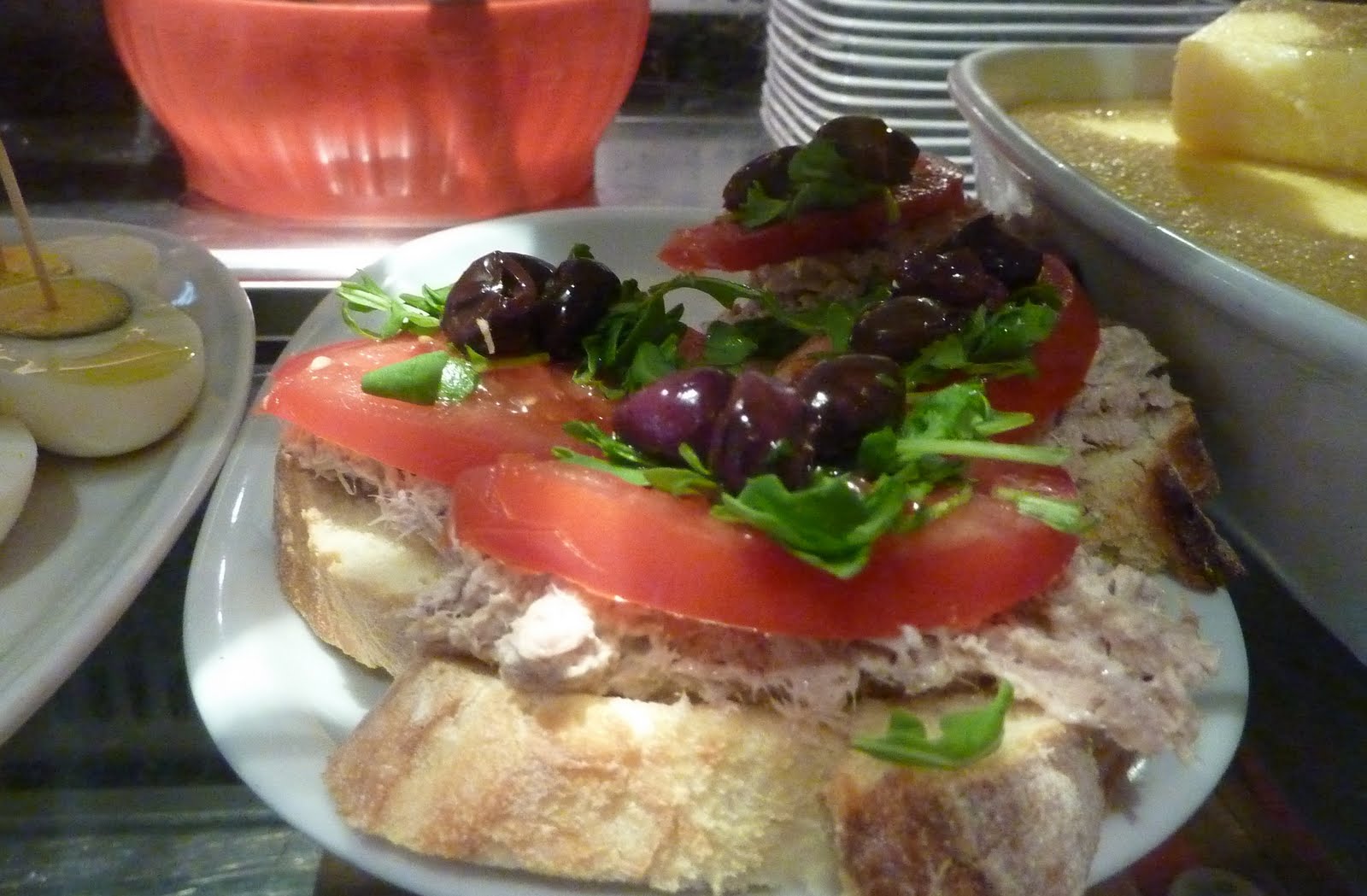 I’ve just returned from ten days in Italy and reentry is a little rough. We’re taking the first couple days slowly and easing the longing for that beautiful place by eating the foods we had there.